
Blog · Goalie how-to
Goalie pad size chart: how to size goalie pads
Pads that are too big slow a goalie down and open holes when they drop. Pads that are too small leave the knees and the five-hole exposed. Height gets you close; one measurement gets you right.
Step 1: measure (two ways, because brands use two)
Floor to knee (FTK) is what most big brands size from today (CCM, Bauer, True and Warrior, and Vaughn on its own chart).
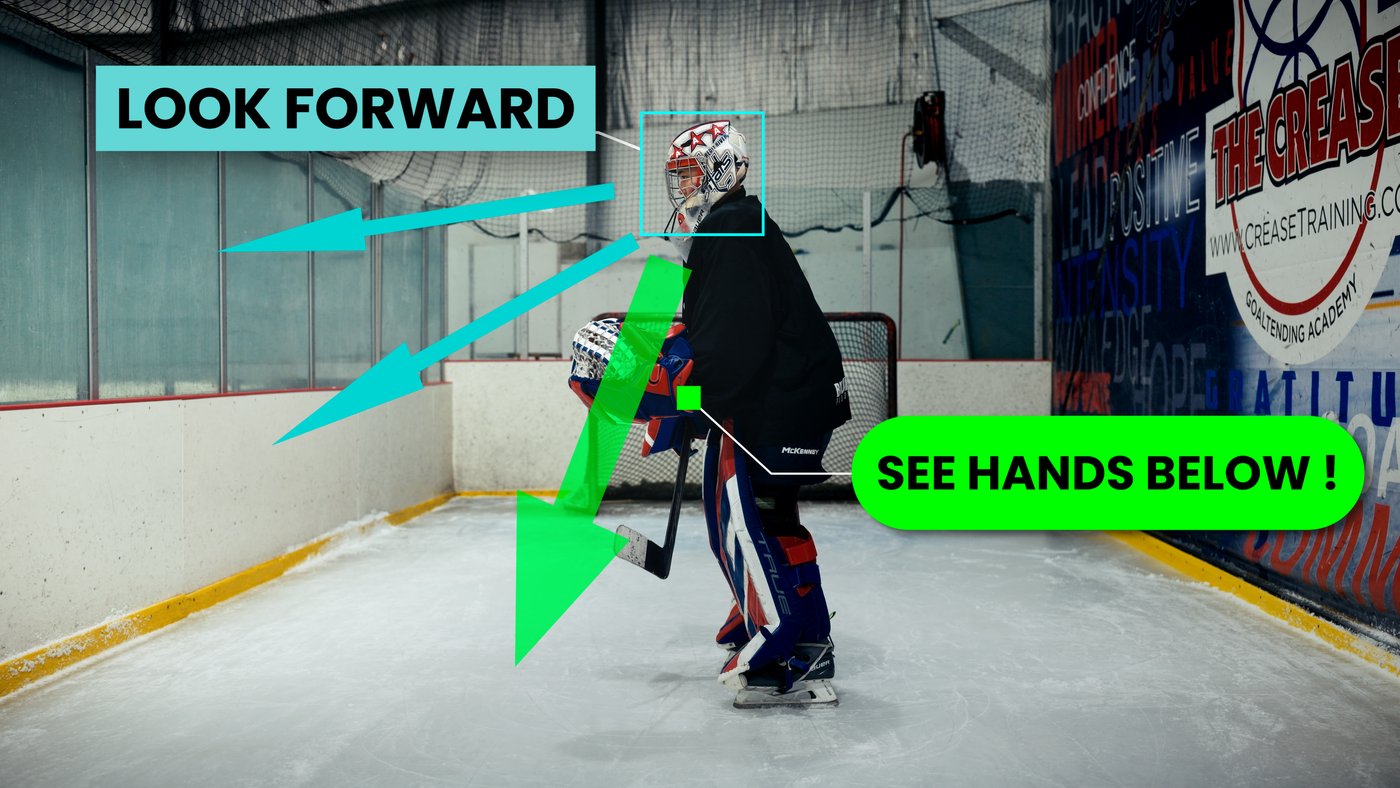
- Goalie in socks or bare feet, feet shoulder-width apart, knees bent a little, like a relaxed stance.
- Find the centre of the kneecap.
- Measure straight down from there to the floor, with a soft tape.
Ankle to knee (ATK) is what many smaller brands and pro-stock sellers use.
- Same stance.
- On the outside of the leg, measure from the centre of the ankle bone to the centre of the kneecap.
- A quick check: double the ATK and you're close to the pad size (17.5" ATK is about a 35" pad).
Write both down, in inches, for both legs, and use the longer leg.
Step 2: find the size
A starting point pulled together from several brand and retailer charts. Each brand runs a little different (Vaughn's chart runs about an inch longer, and some lines are sold in letter sizes), so the chart on the pad you're buying always wins.
| Pad size | Floor to knee (FTK) | Ankle to knee (ATK) | Usually sold as |
|---|---|---|---|
| 20" | up to 13.5" | 11-12" | Youth |
| 22" | 13.5-14" | 12-13" | Youth |
| 24" | 14-15" | 13-14" | Junior |
| 26" | 15-15.5" | 14-15" | Junior |
| 28" | 15.5-16.5" | 14.5-16" | Junior |
| 30" | 17-17.75" | 15.5-17" | Intermediate |
| 31" | 17.75-18.5" | 16-17" | Intermediate |
| 32" | 18.5-19.25" | 16.5-18" | Intermediate / Senior |
| 33" | 19.5-20.25" | 17-18.5" | Senior |
| 34" | 20.25-21" | 17.5-19" | Senior |
| 35" | 21-21.75" | 18-19.5" | Senior |
| 36" | 22-22.75" | 18.5-20" | Senior |
By height? Height is only a rough start: a goalie around six feet is usually in a 33" or 34". Measure.
Between sizes? Smaller moves better; bigger covers more. For a young goalie still growing, going up is fine as long as the knee still lands on the knee block (see below). Not more than an inch.
Step 3: the "+" number (thigh rise)
A pad sold as 33+1 is a 33" pad with an extra inch on top, above the knee, to cover the thigh and the five-hole.
- +1 is the usual. +2 gives more five-hole cover for a wide butterfly. More than that is rare, and usually custom.
- Too much thigh rise makes the pad tall: it can jam into the hip in the butterfly and slow you down.
- A 33+2 and a 34+1 are the same total height, but the 33+2 has its knee block lower. Pick by where the knee lands.
Step 4: check the fit the way a coach does
Try the pads on with skates, pants and knee pads on. The chart gets you a size. These checks tell you it fits:
- Knee on the knee block. In the stance, the centre of the knee sits in the middle of the pad's knee block. In the butterfly, it lands in the middle of the landing, not on the ice or the pad's edge. A growing goalie can sit a little low, up to about an inch under centre; when the knee gets to the top, it's time for the next size.
- The butterfly seals. In the butterfly, the pads rotate flat to the ice and meet in the middle with no gap. If they flare or can't close, the size, the strapping or the knee landing is off.
- The top doesn't hit the hip. Standing, the top of the pad reaches about mid-thigh. In the butterfly it shouldn't jam into the hip or the pants.
- The toe sits on the skate. The toe of the pad lines up with the front of the skate. If it hangs past it, the pad is too long.
- They can move. Have the goalie shuffle, T-push and recover. If the pads catch or swing, try the strapping first, then the size.
Common mistakes
- Buying by age. Ten-year-olds range a foot in height. Measure.
- Measuring standing straight. Bend the knees a little, like the stance.
- Mixing up FTK and ATK. An FTK number on an ATK chart puts you three or four sizes too big. Check which one the brand wants.
- Skipping the second leg. Use the longer one.
- Fixing everything with straps. Strapping helps the pads rotate and stay on, but it can't make a wrong size right.
Learn the stance and the butterfly the pads are built for
The fit checks above come straight from two lessons in the Crease Goaltending Rookie Series: 01 Stance and 06 Butterfly & Recovery. See the Rookie Series
Want a coach to look at the fit and the butterfly in person? Goalie coaching in Toronto
Learn it
With the series, or on the ice
More from the blog
Goalie how-tos and NHL goalie news
NHL goalies
Reimer pulled in his Rangers debut: what a goalie does after a bad period
James Reimer gave up 3 goals on 8 shots and was pulled after one period in his Rangers debut. What happened, and how a young goalie should handle getting pulled.
NHL goalies
Goalie week: Hellebuyck lands in New Jersey, Fowler shines outdoors
NHL goalie news from Oct 19-26: Hellebuyck goes to the Devils, Reimer signs with the Rangers, Fowler stops 33 outdoors. Plus what young goalies can take from each.
Goalie how-to
Goalie skating: the five moves every goalie needs
Goalie skating isn't power skating for forwards. The shuffle, T-push, C-cut, pivot and recovery, how to practise each, and the mistakes to fix first.